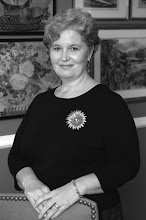
Friday, September 23, 2011

Seek Credible Sources for Information on Movement Disorders


We all know you can’t always rely on information you find on the internet to be accurate, and this includes descriptions of dystonia and other movement disorders. To those of us who live with dystonia every day and who know the importance of promoting awareness, few things are more frustrating than a media story or online blog that disseminates incorrect information about this already frequently misunderstood disorder.

The DMRF applauds a recent letter to the editor in the New England Journal of Medicine that addresses this matter. Physicians are reporting that a growing number of individuals with movement disorders are coming to them with inaccurate portrayals of these disorders from the internet, especially from the video sharing website YouTube. These videos are causing many people undue concern by providing inaccurate depictions of movement disorders (including dystonia) and suggesting treatments and cures not backed by trustworthy sources.

The DMRF echoes the New England Journal of Medicine in reminding those of us with dystonia to seek out credible sources for medical information. We encourage you to verify the sources of information about treatment options and only rely on those backed by solid scientific study and endorsed by a qualified physician trained in movement disorders.

The DMRF will continue to take very seriously our efforts to provide our community with accurate, timely information about dystonia and the latest news in treatments and research—an effort we have undertaken for 35 years. The DMRF is privileged to work closely with the world’s top thought leaders in movement disorders to make sure the information we provide you is sound.

It’s unfortunate that there are people in the world who take advantage of a platform like YouTube, which can do so much good, and use it in a manner that is harmful. This does not in any way diminish the tireless work of our friends in the dystonia community who are promoting awareness—including through social media websites like YouTube and Facebook—and helping the un- and misdiagnosed access the information and resources they need. Now more than ever, we need to make sure individuals impacted with dystonia know where to go for good information.

Art Kessler
President

Monday, September 12, 2011

Dystonia Makes It Into the Smithsonian

One of the messages the DMRF tries to convey to our members is that your story matters. Your story is important. The courageous act of sharing what it’s like to live with dystonia—on whatever level you are comfortable—can inspire others and change lives.

Because Esther Goodhart was generous enough to share her story, she has brought her experience with dystonia to an exhibit at the Smithsonian’s National Portrait Gallery. A gala on September 16, 2011 will celebrate the launch of the exhibit, entitled "Portraiture Now: Asian American Portraits of Encounter." A portrait of Esther joins scores of others in this special exploration of what it means to be Asian in America.

Many congratulations to Esther for this prestigious achievement! She reminds us all to take pride in who we are and where we come from. By examining those qualities we perceive as differences—in terms of gender, race, ethnicity, (dis)ability—we may ultimately realize more clearly how much we are in fact alike. When you share your story, you inspire others to give voice to their own. You help others understand an experience they do not know firsthand. And your story may suddenly become more powerful than you ever imagined it could be.

Monday, August 29, 2011

A Feeling of Community


Like you might expect, when I was finally diagnosed with dystonia after struggling with it for a number of years I rushed home and went online to learn more. I wanted to educate myself about the disorder that had taken so much away from me. I had hopes of finding some magic bullet that might make it go away and make me a "normal" person once again. What I found after just one click of the search engine was the DMRF! It instantly became clear to me that I wasn't alone in searching for a cure and that there were decades of outstanding efforts already invested by the DMRF and the families and individuals who founded and continue to serve the organization. My dystonia was a personal struggle that had been very lonely for me up until that point. That feeling of loneliness has been transformed into a feeling of community - a community driven to support each other while pushing forward through the seemingly impossible science needed to understand the miracle of the human brain.

Never would I have thought that neurology would become as big a part of my daily consciousness as it is today. Some people know of my son and his courageous battle with epilepsy. I can't go more than a few minutes in any day without feeling an immense urgency for the advancement of neuroscience. And never would I have thought while sitting at my computer during my first visit to the DMRF website that I would one day be nominated to the board of directors. It is profoundly humbling to be surrounded by people whose dedication and hard work have put the DMRF at the forefront of the quest for a cure. I'm honored to be joining the board as the DMRF leads important initiatives that will lead to a globalization of our community and the sharing of research currently going on all across the world. Joining the DMRF board of directors inspires me to raise my own expectations for how I can contribute towards finding a cure, how I can better support the raising of awareness of dystonia worldwide and most importantly how I can be an asset to any and all individuals who struggle with the challenges dystonia poses for their own sense of wholeness and self-worth. Together we make greater progress towards our future goal - a world without dystonia.

Billy McLaughlin
DMRF, ex-officio board member

Wednesday, August 24, 2011

Nothing can stop us!


This past weekend 200 people traveled to Chicago to participate in the DMRF’s John H. Menkes Children & Family Symposium. Traveling when you are affected by dystonia is challenging yet these people and their families did and the result was a fabulous gathering of learning, support and wonderful memories. The program was expanded to include adults with focal dystonias – cervical dystonia; focal hand dystonia; dopa-responsive-dystonia; laryngeal dystonia or spasmodic dysphonia and then kids with generalized dystonia; DYT1 dystonia and myoclonic-dystonia. It didn’t matter what form you had – the emphasis was on meeting one another and learning that no one with dystonia needs to battle alone. We had world-class speakers providing information and many new friendships were formed. The DMRF is proud to serve this community and we are ready and willing to assist anyone who needs help – after this weekend we have new volunteers who are also willing to support those who need are facing each day with dystonia.

Thank you to all who made the effort to join us – to all of our wonderful speakers and to our fabulous volunteers. Together – there is nothing that can stop us!

Wednesday, July 20, 2011

Another piece of the puzzle


The DMRF is committed to advancing research and achieving our mission of identifying new and more effective treatments and ultimately a cure for all forms of dystonia. The Foundation has proudly supported most of the world’s leading dystonia researchers resulting in discovery of pieces of the dystonia puzzle. This past week, our understanding was again advanced with the publication of a study that was supported by the DMRF and the National Institute of Neurological Disorders & Stroke.

DMRF grant recipient Flavia Nery, PhD and longtime dystonia investigator Xandra Breakefield, PhD of Harvard’s Massachusetts General Hospital, and their collaborators have discovered a significant clue toward understanding why a mutation in the DYT1 gene might lead to dystonia. According to the paper published in the prestigious online journal, Nature Communications, torsinA is involved in eliminating misfolded proteins from a part of the cell called the endoplasmic reticulum. When mutant torsinA, which causes DYT1 dystonia, is present, it interferes with this process, making cells unusually vulnerable to cellular stress that may compromise neuronal function. This work demonstrates a cellular link between the disease-causing torsinA mutation and fundamental mechanisms of neuronal dysfunction that may ultimately lead to dystonia.

DMRF Science Officer Jan Teller, MA, PhD explains, “Essentially, all dystonia disorders are considered a neural circuits malfunction. Therefore finding any molecular or biochemical way to put these circuits back ‘in order’ would be beneficial to all dystonias. Understanding how this works in DYT1 dystonia may suddenly open up new possibilities for designing dystonia-specific treatments.” Current dystonia therapies such as botulinum neurotoxin injections and deep brain stimulation surgery suppress symptoms without altering or improving the course of the disease. A new generation of therapies that target dystonia at the cellular level would be revolutionary to the field and could provide relief to thousands of patients.

Monday, June 27, 2011

Dystonia Advocacy Day and beyond


The fight to make sure dystonia we leave no stone unturned in securing support for dystonia research continues. Last month over 120 advocates went to Washington, DC to ask Members of Congress to support our request to have dystonia continue to be on the list of conditions eligible to have our researchers apply for funding through the Congressionally Directed Medical Research Program managed by the Department of Defense. Last week, Dee Linde – a DMRF and BEBRF volunteer provided testimony before the Senate Defense Appropriations Subcommittee to ask for their support. Dee, a former Navy petty officer, provided dystonia information to the Subcommittee members – appealing to them to help us learn more about dystonia so that we might be able to reduce or even eliminate the suffering of returning military personnel who, because of a traumatic brain injury, might be at risk for developing dystonia. The work of the Dystonia Advocacy Network members continues well beyond Advocacy Day and this is just one example of these efforts. Many thanks to Dee for sharing her personal story with the Senators present and to everyone who is working to keep the pressure on!

Monday, June 13, 2011

Dystonia Awareness Week Reflections

Increasing awareness of dystonia is an ongoing challenge but with the continued efforts of this community – we will help people truly understand what dystonia is and how it changes lives. We’ve just completed Dystonia Awareness Week and we want to thank the many people who made a special effort these past seven days to tell their stories – to reach out and talk about dystonia. We are grateful to those of you who ‘tweated’ during dystonia twitter day on Tuesday of this past week, to those of you who have shared your stories by becoming a part of the Faces of Dystonia program, and to those of you who shared your story through the media – it all makes a difference! Whether you are telling of your experiences through a national outlet or while standing in line at the grocery store – you are giving selflessly so that others will learn about dystonia. Every effort counts. Congratulations on your good efforts. Let’s keep it up!