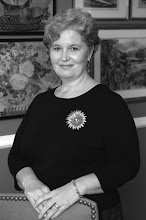
The DMRF’s amazing network of members and volunteers is one of the organization’s strengths. We are grateful for the feedback we receive from the community because your suggestions help us improve our programs. A request we heard loud and clear was the need for improved resources for individuals in the dystonia community ages 20-40, and especially an online forum to help people in this demographic connect with one another. The DMRF was proud to launch the 20/30 Dystonia Group this week, and have been very gratified by the positive response. Many thanks to volunteer administrators Marcie Povitsky and Ginny Bryan for welcoming people to the group and sharing their own experiences with dystonia to help support others. And special thanks to Marcie for taking a leadership role in making this new Facebook group available.
Visit the 20/30 Dystonia Group at: https://www.facebook.com/groups/2030dmrf/
This is the newest of several Facebook groups the DMRF has created this year, and more are planned. Click here to access a list of all DMRF online resources.
Your phone calls, emails, social network postings, and mail are constant inspiration for the DMRF to do more, try harder, reach farther. Please continue to let us know how we can serve you better.
Wednesday, June 27, 2012


Tuesday, June 5, 2012
Dystonia Awareness Week, June 3-9, 2012

This year, the DMRF is using Dystonia Awareness Week to launch the Face2Face campaign. We’re encouraging individuals who have been impacted by dystonia to do what many of you already do: to share your story with the people in your everyday lives. We encourage you to take a moment to educate your neighbors, acquaintances, friends at the dog park, wait staff at your favorite restaurant, tellers at the bank. The DMRF can provide simple materials to support you in this effort: http://www.dystonia-foundation.org/face2face
Your dystonia story is a powerful instrument for awareness. Who can predict the lives you may change for the better by sharing your experiences and opening up about your or your loved one’s diagnosis?
Amy Behar and Silas Courson of Dallas used a backstage visit at a Flaming Lips concert to educate members of the band on dystonia. Val and Ernie Inman, leaders of the Tampa Bay Dystonia Support Group, created a “What is Dystonia?” QR code to help inform the tech savvy among us. We are impressed by the creativity of our volunteers to get the word out and educate the public about dystonia.
Please update us on your awareness efforts by joining a special Face2Face group on Facebook and sharing how you are promoting awareness: https://www.facebook.com/groups/face2facedmrf/ Don‘t be modest – we’d love to hear from you!
Thank you for your support. We appreciate each and every one of you.
Wednesday, March 14, 2012
Musician's Dystonia Summit a Great Success

The Musician’s Dystonia Summit that took place this past weekend was the very first event of its kind. The Summit was made possible by sponsorships provided from Allergan, The Medtronic Foundation, Merz, and Jack and Nancy Britts. The DMRF has been funding research on musician’s dystonia for many years, and this event provided an historic occasion to stop and review what the research is telling us and what we need to do next to accelerate improved treatments. The Summit also provided an important opportunity for affected musicians to meet and exchange information. Some of the discussion became very emotional as participants shared the depth of how dystonia shattered their careers and livelihoods—not an uncommon experience for people with all forms of the disorder. We extend our deep appreciation to the musicians who shared their stories and the researchers and physicians who are working tirelessly to meet the needs of this community.
The DMRF was proud to honor Musicians With Dystonia founders Glen Estrin and Steven Frucht, MD for their years of service to the musician’s community. Many thanks for their essential role in bringing the Musician’s Summit to fruition. (Glen and Dr. Frucht are pictured here with David Leisner.)
Many thanks, also, to the performers who shared their talents Friday evening for a spectacular concert by David Leisner, The Fiddling Thomsons, and Billy McLaughlin joined by a quartet including Steven Leung, Dr. Frucht, and Dr. Frucht’s amazing daughters.
New York Times reporter James R. Oestreich covered the Musician’s Summit in today’s issue. Click here to access the article.
Research on musician’s dystonia will help scientists better understand all dystonias. Scientists are challenged to connect the dots between the intense, repetitive practice of specific fine motor movements and the onset of symptoms – this will reveal fundamental information about how and why dystonia occurs.
For more information on musician’s dystonia visit the DMRF website at www.dystonia-foundation.org/musicians
Friday, March 2, 2012
Building the Bridge

Bridge funding is an important way to keep investigators working in dystonia while they await the support decisions of National Institutes of Health (NIH) or other funding sources. This type of funding is particularly important during these challenging economic times. The DMRF was pleased to provide bridge funding for Naoto Ito, PhD in late 2010, and we are now very pleased to learn that Dr. Ito has received funding through the Peer Review Medical Research Program (PRMRP) administered by the Department of Defense (DOD). The public abstract for his PRMRP project is listed below. We congratulate Dr. Ito and his collaborators on this award.
We want to thank the DMRF donors who have supported our research efforts that allowed the Foundation to provide this important bridge funding and maintain his project. We also want to thank and congratulate the many Dystonia Advocacy Network advocates who worked so hard to have dystonia included on the list of eligible conditions for the DOD research program. We look forward to good things coming from this research, which is creating a fruit fly model of dystonia that may eventually be put to use for validating new therapies.
Public Abstract
"A Novel Locomotion-based Validation Assay for Candidate Drugs Using Drosophila
DYT1 Disease Model"
Dystonia is the third most common movement disorder in humans and can be caused by hereditary factors, brain trauma, and psychiatric drugs. DYT1 is the most severe and common form of hereditary dystonia caused by a mutant protein torsinA. There are no good model systems currently available for quickly validating the potential for candidate drugs that focus on muscle movement of whole animals as an indicator. We propose here to develop a novel mobility-based system for testing potential dystonia drugs using Drosophila model system.
The fruitfly, Drosophila, has a single torsin-related gene. Recently fly lines that lacked Drosophila torsin gene have been created, which exhibited slower mobility. These defects could be rescued by the introduction of the normal human torsinA gene into flies, demonstrating that the locomotion functions of torsin genes are conserved between human and Drosophila.
We will create a model system expressing abnormal human torsinA proteins as functional torsin proteins. We expect that the mutant form of human torsinA (ΔE) will interfere with the normal function of human torsinA and lead to a decrease in larval mobility. We will add drug candidates to the food where the larvae grow and determine which drugs can restore the mobility to a normal level. This system will give us rapid way of accessing the effects of drugs on the mobility defect caused by the torsinA mutation. We will also use a set of fly lines expressing inhibitory RNAs for different genes to identify additional proteins that affect dystonia-related fly mobility.
Tuesday, February 7, 2012
Music’s Dirty Little Secret
The dirty little secret in some music circles isn’t what you might think. It’s not drugs, groupies, or feuding band members. It’s dystonia.
Although dystonia is considered a rare disorder, professional musicians clearly appear to be at increased risk. Experts have suggested that one in 200 musicians may develop dystonia over the course of his/her career.
Dystonia awareness among musicians has grown over the last decade, but it’s still a topic many affected performers find difficult to talk about publicly. Like individuals with other forms of dystonia, the loss of abilities that once were routine turns a musician’s life and career upside down. Prior to diagnosis, musicians often perceive early symptoms as the result of faulty technique or lack of sufficient preparation. Increasing practice or taking time off does not help, and the symptoms only get worse. Critics may suspect a performer has “lost his chops” or has a substance abuse problem because of uncharacteristically strained or imprecise playing. The fact that symptoms only occur when playing an instrument is one of the most frustrating and baffling aspects of the disorder—but it may also hold the key to better understanding how symptoms occur and how to effectively treat them.
The Dystonia Medical Research Foundation (DMRF) is proud to partner with Musicians With Dystonia to host the first ever Musician’s Dystonia Summit, March 9-10, 2012 in New York, New York. Musicians and researchers are gathering to discuss the latest information on musician’s dystonia, best treatment practices, and future scientific directions.
Musician's dystonia provides an opportunity to better understand all dystonias. There is a clear connection between the onset of dystonia and the intense and lengthy practice of difficult and skilled music over a long period of time. When researchers can “connect the dots” and figure out how this overuse leads to symptoms, this will be a huge breakthrough to better understand the dystonia disease mechanism—and therefore bring us one step closer to better treatments and a cure.
Many thanks to members of the planning committee who have worked diligently to build an outstanding agenda of speakers and bring this special meeting to fruition, including Mahlon DeLong, MD, Glen Estrin , Steven Frucht, MD, Mark Hallett, MD, Billy McLaughlin, and Jan Teller, PhD. We also appreciate the many musicians who are graciously donating their time to share their stories and talents at the Summit. See the DMRF website for a detailed agenda and information on how to register.
Although dystonia is considered a rare disorder, professional musicians clearly appear to be at increased risk. Experts have suggested that one in 200 musicians may develop dystonia over the course of his/her career.
Dystonia awareness among musicians has grown over the last decade, but it’s still a topic many affected performers find difficult to talk about publicly. Like individuals with other forms of dystonia, the loss of abilities that once were routine turns a musician’s life and career upside down. Prior to diagnosis, musicians often perceive early symptoms as the result of faulty technique or lack of sufficient preparation. Increasing practice or taking time off does not help, and the symptoms only get worse. Critics may suspect a performer has “lost his chops” or has a substance abuse problem because of uncharacteristically strained or imprecise playing. The fact that symptoms only occur when playing an instrument is one of the most frustrating and baffling aspects of the disorder—but it may also hold the key to better understanding how symptoms occur and how to effectively treat them.
The Dystonia Medical Research Foundation (DMRF) is proud to partner with Musicians With Dystonia to host the first ever Musician’s Dystonia Summit, March 9-10, 2012 in New York, New York. Musicians and researchers are gathering to discuss the latest information on musician’s dystonia, best treatment practices, and future scientific directions.
Musician's dystonia provides an opportunity to better understand all dystonias. There is a clear connection between the onset of dystonia and the intense and lengthy practice of difficult and skilled music over a long period of time. When researchers can “connect the dots” and figure out how this overuse leads to symptoms, this will be a huge breakthrough to better understand the dystonia disease mechanism—and therefore bring us one step closer to better treatments and a cure.
Many thanks to members of the planning committee who have worked diligently to build an outstanding agenda of speakers and bring this special meeting to fruition, including Mahlon DeLong, MD, Glen Estrin , Steven Frucht, MD, Mark Hallett, MD, Billy McLaughlin, and Jan Teller, PhD. We also appreciate the many musicians who are graciously donating their time to share their stories and talents at the Summit. See the DMRF website for a detailed agenda and information on how to register.
Tuesday, December 13, 2011
Volunteers Needed for Global Dystonia Registry

The DMRF is proud to be a part of a two-year effort to develop and implement the first-ever patient registry devoted to focal dystonias. The registry is designed to collect data on persons affected with a focal dystonia(s) to assist in clinical research efforts including clinical and research trials.
This collaboration is between dystonia patient organizations and the research leaders of the Dystonia Coalition to develop and offer this self-reporting patient registry to the dystonia community. “The registry is a fantastic new opportunity for the dystonia community worldwide. It is going to be extremely valuable for fostering better communication between people who are affected by dystonia and researchers who are trying to learn more about dystonia,” said Dr. H. Jinnah, the principal investigator for the Dystonia Coalition. The goal of the registry is to support future dystonia studies through the collection of data on persons affected by dystonia.
Although the focal dystonias have many different manifestations, most experts believe they share a common pathogenesis or mechanism that causes the disorder. The common causes may be a similar gene defect, similar lifetime experiences, or both. Collecting information from different patient populations may help us identify the common features that they may share. This Registry compliments the current scope of research for the Dystonia Coalition, a National Institutes of Health supported clinical research effort.
To learn more or to register with the Global Dystonia Registry go to: http://www.globaldystoniaregistry.org/
Tuesday, November 22, 2011
Giving Thanks
During this season of thanks, I want to take this opportunity to thank all of you who have supported the DMRF and those we serve. Your efforts are deeply appreciated and allow us to carry out the organization’s mission. We could not do what we do without you.
We are grateful to our researchers and Medical & Scientific Advisors for the work they do to get us to that magic day when the DMRF is no longer needed because a cure has been found.
We are thankful to our clinicians who work so hard to help alleviate the pain and suffering dystonia brings everyone touched by this disorder.
We appreciate the tireless efforts of our support group leaders who work to meet the needs in their communities while providing a helpful hand to those managing every day with dystonia.
We want to thank the growing number of advocates who are working to have the legislative needs of this community addressed by our Federal and State Legislators.
We are grateful to those who have shared their dystonia story so that others can better understand what dystonia is and how it changes lives.
To anyone who has listened to someone having a rough day and offered encouragement or to those who were in a position to give a hug to let someone know they are not in this alone, we are thankful for your kindness and warmth.
We appreciate our donors who have placed their trust in the DMRF and who have allowed us to do the work we do. We value the pharma companies who work to produce therapies that, together with a treating physician, are bringing relief to many.
Finally, we appreciate our dystonia partners, the other Dystonia Advocacy Network Members – BEBRF, DySTonia, Inc., NSDA, and NSTA, Tyler’s Hope, our European partners – groups that the DMRF has worked with to advance our understanding of dystonia while working to meet the needs of those affected by dystonia.
This Thanksgiving we will be thinking about everyone who has worked to make a difference in the life of someone touched by dystonia. Thank you.
We are grateful to our researchers and Medical & Scientific Advisors for the work they do to get us to that magic day when the DMRF is no longer needed because a cure has been found.
We are thankful to our clinicians who work so hard to help alleviate the pain and suffering dystonia brings everyone touched by this disorder.
We appreciate the tireless efforts of our support group leaders who work to meet the needs in their communities while providing a helpful hand to those managing every day with dystonia.
We want to thank the growing number of advocates who are working to have the legislative needs of this community addressed by our Federal and State Legislators.
We are grateful to those who have shared their dystonia story so that others can better understand what dystonia is and how it changes lives.
To anyone who has listened to someone having a rough day and offered encouragement or to those who were in a position to give a hug to let someone know they are not in this alone, we are thankful for your kindness and warmth.
We appreciate our donors who have placed their trust in the DMRF and who have allowed us to do the work we do. We value the pharma companies who work to produce therapies that, together with a treating physician, are bringing relief to many.
Finally, we appreciate our dystonia partners, the other Dystonia Advocacy Network Members – BEBRF, DySTonia, Inc., NSDA, and NSTA, Tyler’s Hope, our European partners – groups that the DMRF has worked with to advance our understanding of dystonia while working to meet the needs of those affected by dystonia.
This Thanksgiving we will be thinking about everyone who has worked to make a difference in the life of someone touched by dystonia. Thank you.
Subscribe to:
Posts (Atom)


 Posts
Posts