Showing posts with label dystonia medical research foundation. Show all posts

Tuesday, June 5, 2012

Dystonia Awareness Week, June 3-9, 2012

June 3-9, 2012 is Dystonia Awareness Week. Although promoting dystonia awareness is something the DMRF is devoted to doing year round, this week represents a special effort to rally all of us in the dystonia community to combine our efforts for maximum reach.

This year, the DMRF is using Dystonia Awareness Week to launch the Face2Face campaign. We’re encouraging individuals who have been impacted by dystonia to do what many of you already do: to share your story with the people in your everyday lives.  We encourage you to take a moment to educate your neighbors, acquaintances, friends at the dog park, wait staff at your favorite restaurant, tellers at the bank. The DMRF can provide simple materials to support you in this effort:  http://www.dystonia-foundation.org/face2face

Your dystonia story is a powerful instrument for awareness. Who can predict the lives you may change for the better by sharing your experiences and opening up about your or your loved one’s diagnosis?

Amy Behar and Silas Courson of Dallas used a backstage visit at a Flaming Lips concert to educate members of the band on dystonia. Val and Ernie Inman, leaders of the Tampa Bay Dystonia Support Group, created a “What is Dystonia?” QR code to help inform the tech savvy among us. We are impressed by the creativity of our volunteers to get the word out and educate the public about dystonia.

Please update us on your awareness efforts by joining a special Face2Face group on Facebook and sharing how you are promoting awareness: https://www.facebook.com/groups/face2facedmrf/ Don‘t be modest – we’d love to hear from you!

Thank you for your support. We appreciate each and every one of you.

Friday, September 23, 2011

Seek Credible Sources for Information on Movement Disorders


We all know you can’t always rely on information you find on the internet to be accurate, and this includes descriptions of dystonia and other movement disorders. To those of us who live with dystonia every day and who know the importance of promoting awareness, few things are more frustrating than a media story or online blog that disseminates incorrect information about this already frequently misunderstood disorder.

The DMRF applauds a recent letter to the editor in the New England Journal of Medicine that addresses this matter. Physicians are reporting that a growing number of individuals with movement disorders are coming to them with inaccurate portrayals of these disorders from the internet, especially from the video sharing website YouTube. These videos are causing many people undue concern by providing inaccurate depictions of movement disorders (including dystonia) and suggesting treatments and cures not backed by trustworthy sources.

The DMRF echoes the New England Journal of Medicine in reminding those of us with dystonia to seek out credible sources for medical information. We encourage you to verify the sources of information about treatment options and only rely on those backed by solid scientific study and endorsed by a qualified physician trained in movement disorders.

The DMRF will continue to take very seriously our efforts to provide our community with accurate, timely information about dystonia and the latest news in treatments and research—an effort we have undertaken for 35 years. The DMRF is privileged to work closely with the world’s top thought leaders in movement disorders to make sure the information we provide you is sound.

It’s unfortunate that there are people in the world who take advantage of a platform like YouTube, which can do so much good, and use it in a manner that is harmful. This does not in any way diminish the tireless work of our friends in the dystonia community who are promoting awareness—including through social media websites like YouTube and Facebook—and helping the un- and misdiagnosed access the information and resources they need. Now more than ever, we need to make sure individuals impacted with dystonia know where to go for good information.

Art Kessler
President

Monday, September 12, 2011

Dystonia Makes It Into the Smithsonian

One of the messages the DMRF tries to convey to our members is that your story matters. Your story is important. The courageous act of sharing what it’s like to live with dystonia—on whatever level you are comfortable—can inspire others and change lives.

Because Esther Goodhart was generous enough to share her story, she has brought her experience with dystonia to an exhibit at the Smithsonian’s National Portrait Gallery. A gala on September 16, 2011 will celebrate the launch of the exhibit, entitled "Portraiture Now: Asian American Portraits of Encounter." A portrait of Esther joins scores of others in this special exploration of what it means to be Asian in America.

Many congratulations to Esther for this prestigious achievement! She reminds us all to take pride in who we are and where we come from. By examining those qualities we perceive as differences—in terms of gender, race, ethnicity, (dis)ability—we may ultimately realize more clearly how much we are in fact alike. When you share your story, you inspire others to give voice to their own. You help others understand an experience they do not know firsthand. And your story may suddenly become more powerful than you ever imagined it could be.

Monday, August 29, 2011

A Feeling of Community


Like you might expect, when I was finally diagnosed with dystonia after struggling with it for a number of years I rushed home and went online to learn more. I wanted to educate myself about the disorder that had taken so much away from me. I had hopes of finding some magic bullet that might make it go away and make me a "normal" person once again. What I found after just one click of the search engine was the DMRF! It instantly became clear to me that I wasn't alone in searching for a cure and that there were decades of outstanding efforts already invested by the DMRF and the families and individuals who founded and continue to serve the organization. My dystonia was a personal struggle that had been very lonely for me up until that point. That feeling of loneliness has been transformed into a feeling of community - a community driven to support each other while pushing forward through the seemingly impossible science needed to understand the miracle of the human brain.

Never would I have thought that neurology would become as big a part of my daily consciousness as it is today. Some people know of my son and his courageous battle with epilepsy. I can't go more than a few minutes in any day without feeling an immense urgency for the advancement of neuroscience. And never would I have thought while sitting at my computer during my first visit to the DMRF website that I would one day be nominated to the board of directors. It is profoundly humbling to be surrounded by people whose dedication and hard work have put the DMRF at the forefront of the quest for a cure. I'm honored to be joining the board as the DMRF leads important initiatives that will lead to a globalization of our community and the sharing of research currently going on all across the world. Joining the DMRF board of directors inspires me to raise my own expectations for how I can contribute towards finding a cure, how I can better support the raising of awareness of dystonia worldwide and most importantly how I can be an asset to any and all individuals who struggle with the challenges dystonia poses for their own sense of wholeness and self-worth. Together we make greater progress towards our future goal - a world without dystonia.

Billy McLaughlin
DMRF, ex-officio board member

Wednesday, August 24, 2011

Nothing can stop us!


This past weekend 200 people traveled to Chicago to participate in the DMRF’s John H. Menkes Children & Family Symposium. Traveling when you are affected by dystonia is challenging yet these people and their families did and the result was a fabulous gathering of learning, support and wonderful memories. The program was expanded to include adults with focal dystonias – cervical dystonia; focal hand dystonia; dopa-responsive-dystonia; laryngeal dystonia or spasmodic dysphonia and then kids with generalized dystonia; DYT1 dystonia and myoclonic-dystonia. It didn’t matter what form you had – the emphasis was on meeting one another and learning that no one with dystonia needs to battle alone. We had world-class speakers providing information and many new friendships were formed. The DMRF is proud to serve this community and we are ready and willing to assist anyone who needs help – after this weekend we have new volunteers who are also willing to support those who need are facing each day with dystonia.

Thank you to all who made the effort to join us – to all of our wonderful speakers and to our fabulous volunteers. Together – there is nothing that can stop us!

Wednesday, July 20, 2011

Another piece of the puzzle


The DMRF is committed to advancing research and achieving our mission of identifying new and more effective treatments and ultimately a cure for all forms of dystonia. The Foundation has proudly supported most of the world’s leading dystonia researchers resulting in discovery of pieces of the dystonia puzzle. This past week, our understanding was again advanced with the publication of a study that was supported by the DMRF and the National Institute of Neurological Disorders & Stroke.

DMRF grant recipient Flavia Nery, PhD and longtime dystonia investigator Xandra Breakefield, PhD of Harvard’s Massachusetts General Hospital, and their collaborators have discovered a significant clue toward understanding why a mutation in the DYT1 gene might lead to dystonia. According to the paper published in the prestigious online journal, Nature Communications, torsinA is involved in eliminating misfolded proteins from a part of the cell called the endoplasmic reticulum. When mutant torsinA, which causes DYT1 dystonia, is present, it interferes with this process, making cells unusually vulnerable to cellular stress that may compromise neuronal function. This work demonstrates a cellular link between the disease-causing torsinA mutation and fundamental mechanisms of neuronal dysfunction that may ultimately lead to dystonia.

DMRF Science Officer Jan Teller, MA, PhD explains, “Essentially, all dystonia disorders are considered a neural circuits malfunction. Therefore finding any molecular or biochemical way to put these circuits back ‘in order’ would be beneficial to all dystonias. Understanding how this works in DYT1 dystonia may suddenly open up new possibilities for designing dystonia-specific treatments.” Current dystonia therapies such as botulinum neurotoxin injections and deep brain stimulation surgery suppress symptoms without altering or improving the course of the disease. A new generation of therapies that target dystonia at the cellular level would be revolutionary to the field and could provide relief to thousands of patients.

Monday, June 27, 2011

Dystonia Advocacy Day and beyond


The fight to make sure dystonia we leave no stone unturned in securing support for dystonia research continues. Last month over 120 advocates went to Washington, DC to ask Members of Congress to support our request to have dystonia continue to be on the list of conditions eligible to have our researchers apply for funding through the Congressionally Directed Medical Research Program managed by the Department of Defense. Last week, Dee Linde – a DMRF and BEBRF volunteer provided testimony before the Senate Defense Appropriations Subcommittee to ask for their support. Dee, a former Navy petty officer, provided dystonia information to the Subcommittee members – appealing to them to help us learn more about dystonia so that we might be able to reduce or even eliminate the suffering of returning military personnel who, because of a traumatic brain injury, might be at risk for developing dystonia. The work of the Dystonia Advocacy Network members continues well beyond Advocacy Day and this is just one example of these efforts. Many thanks to Dee for sharing her personal story with the Senators present and to everyone who is working to keep the pressure on!

Monday, June 13, 2011

Dystonia Awareness Week Reflections

Increasing awareness of dystonia is an ongoing challenge but with the continued efforts of this community – we will help people truly understand what dystonia is and how it changes lives. We’ve just completed Dystonia Awareness Week and we want to thank the many people who made a special effort these past seven days to tell their stories – to reach out and talk about dystonia. We are grateful to those of you who ‘tweated’ during dystonia twitter day on Tuesday of this past week, to those of you who have shared your stories by becoming a part of the Faces of Dystonia program, and to those of you who shared your story through the media – it all makes a difference! Whether you are telling of your experiences through a national outlet or while standing in line at the grocery store – you are giving selflessly so that others will learn about dystonia. Every effort counts. Congratulations on your good efforts. Let’s keep it up!

Thursday, March 17, 2011

35 Years of Dedication


At the Foundation’s annual meeting last month, we recognized 35 years of dedication to achieving our goal of a cure for dystonia, 35 years of stimulating research, promoting awareness and providing support for dystonia-affected persons and their families. The meeting was productive and we look forward to announcing the grants we will be funding this year and to providing a report on the progress we have made over these past three decades toward achieving our goal.

Throughout the meeting I was struck with the dedication of every person there. The members of our Medical and Scientific Advisory Council, people who are incredibly busy, but who gave us their time to thoughtfully review and discuss the merits of the grant and fellowship applications. There were our recently funded investigators who presented on their research and then engaged in discussions regarding where best to direct research to advance our knowledge. The Foundation’s Board Members – people who work tirelessly to provide financial support and guidance so the DMRF can be there for those who turn to us for information, support and help. We were fortunate to have a number of guests, people who have made significant contributions to the field by reviewing grants through the Department of Defense Peer-Reviewed Medical Research Program or who have worked hard to create dystonia awareness and lead support groups. We were pleased to welcome Fiona Ross, the Chairman of the Board for the Dystonia Society in the UK – reflective of the communities desire to work collaboratively if we are to be successful in battling dystonia.

Many of these people have been there from the very beginning – and they reiterated that they are not going anywhere until we reach our goal of a cure. The anniversary provided the DMRF with the opportunity to acknowledge the extraordinary people who have been with us on this journey. People who have worked selflessly to help us end dystonia. We recognized these amazing individuals with the DMRF Distinguished Service Award.

It is my honor to announce that the DMRF Distinguished Service Award was given to the following people:

Stanley Fahn, MD - Mark Hallett, MD
Mahlon DeLong, MD - Xandra Breakefield, PhD
Laurie Ozelius, PhD - Susan Bressman, MD
Samuel Belzberg - Frances Belzberg
Dennis Kessler - Rosalie Lewis
Joseph Jankovic, MD - Claire Centrella

We thank each of these wonderfully dedicated people for their commitment to the DMRF and the dystonia community. The DMRF continues its work. Our commitment to the community remains steadfast. The DMRF is not going anywhere until we achieve our mission.

Thursday, January 20, 2011

Good News


It seems hard to believe that we are already in the middle of January. The holidays are nothing but a faint memory now – hope your season was a good one. I want to thank everyone for their hard work and support last year. We could not do what we do without you and your efforts have helped us off to a great start in this New Year.

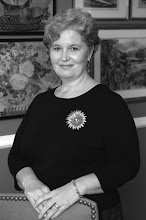
The first good bit of news is that two dystonia researchers have been funded through the Department of Defense Peer-Reviewed Medical Research Program. Cris Bragg, PhD (pictured) and Kathleen Sweadner, PhD will receive funding for their work through this program. We offer our congratulations to them and to the many Dystonia Advocacy Network volunteers who have worked so hard over the past many years to get dystonia included on the list of eligible disorders so that our researchers could apply for this funding. We are also able to begin the year with gratitude to the Centers for Medicare and Medicaid Services for issuing a temporary billing code for the recently approved botulinum toxin, type A, Xeomin®. This means that dystonia-affected persons will have access to all FDA approved treatments because now doctors who might have been reluctant to use this new treatment because of potential billing hassles will have those hassles removed. We want to thank the CMS staff for their receptivity to hearing the patient’s perspective on this issue and again thank the DAN volunteers who made visits to Members of Congress in August and who went to CMS to provide personal testimony. The collaboration of the DAN organizations is to be celebrated as we are moving forward to meet the needs of those affected by dystonia.

Wednesday, December 29, 2010

A Year of Progress


A year of progress, 2010 has taken us important steps closer toward the Foundation’s mission of supporting research that will lead to a cure, education and dystonia awareness, and those individuals affected by dystonia and their families. The DMRF is proud of the work we have done these past 12 months, and we thank our many volunteers, advocates, donors and our local and national leaders. We have achieved all we have in 2010 because of the support of these remarkable people.

This year, we continued our commitment to funding of cutting edge-research and fellowships and approved 15 research projects. The Foundation’s Science Officer worked with another 5 investigators to develop contracts that will help us fill in some of the missing pieces of this big dystonia puzzle. The DMRF is pleased to partner with the Foundation for Dystonia Research to support a better understanding of dystonia. The DMRF is also pleased to partner with Tyler’s Hope for a Dystonia Cure in supporting phase II of the BioFocus project, an important scientific research project that is designed to identify and validate potential targets, that will hopefully lead to drug development for DYT1 dystonia. Our work in serving as an administrative center for the Dystonia Coalition, an NIH sponsored clinical research project, continues.

The DMRF has been honored to work with the Dystonia Advocacy Network (DAN) for the past five years. Joining with members of the Benign Essential Blepharospasm Research Foundation, the National Spasmodic Dysphonia Association, the National Spasmodic Torticollis Association and DySTonia, Inc., we have worked to make sure the legislative and policy needs of the dystonia community are heard in Washington, D.C. This past year, DMRF President, Art Kessler, provided testimony to the FDA and longtime DMRF leader, Kathy Rentfrow, provided testimony before the Senate Defense Appropriations Subcommittee regarding dystonia research funding. The DAN has worked to ensure that all patients have access to all approved treatments for dystonia and just last week met with key individuals at the Centers for Medicare Services regarding this issue.

We welcomed new support groups to our network of local resources working tirelessly to make sure people know they are not alone in this battle. Our regional meetings helped to provide education and connect people with one another.

Our commitment to our mission remains resolute, and we look forward to continuing our progress into 2011.

But we always remember that we can’t do it without you. Thank you for all you have done this past year. I wish you and your families all the best in the New Year ahead.

Thursday, December 16, 2010

Remembering Charles H. Markham, MD


It is with a deep sadness that I report the sudden death of Charles H. Markham, MD. Dr. Markham died in his home in Santa Barbara, CA last month.

Dr. Markham was an extraordinary man. He grew up in Southern California and served in the army during WWII, stationed in France, Belgium and Germany. During his service, he befriended a neurophsychiatrist who had Parkinson’s Disease and who was influential in Dr. Markham’s decision to become a physician.

Dr. Markham’s contributions to the DMRF and the dystonia community will be long felt. While at UCLA, Dr. Markham investigated the structure and function of the basal ganglia while evaluating treatments for Parkinson’s Disease, dystonia, and epilespsy. He was also committed to assisting patients in receiving the best treatments possible. Dr. Markham served as the DMRF’s Scientific Director from 1985 to 1994 helping to shape and develop both the DMRF’s research program and the Foundation during an important time. Since his retirement from this position, Dr. Markham continued to participate in scientific discussions – providing important guidance and counsel. He was instrumental in developing and implementing the brain tissue donation program. We send our condolences to Dr. Markham’s family and his many, many friends. He will be missed.

During this time of reflection and thanks, we here at the DMRF are thankful to have had the benefit of scientific leaders as Dr. Markham and so many others. Their commitment to this community is inspiring.

Friday, November 5, 2010

Why not?


For nearly 35 years, the DMRF has been asking questions of our researchers, pushing them for scientific answers and always moving forward with a “can-do” attitude. At first, it was an uphill battle – trying to convince researchers that this was a field worthy of their time and energy. Recently, we have seen more activity and enthusiasm around dystonia research, more information and more progress. This is all to be celebrated by everyone in the dystonia community! We want you to know that the DMRF continues to push – asking ourselves, “Why not?” Why shouldn’t we take what we now know and push the science further to see what we learn? This is why the Foundation is taking the next step with a major project that we hope will lead to identifying proteins that modify the DYT1 dystonia phenotype. The concept is to use a genetic approach based on silencing selected genes and monitoring the effect of such silencing on torsinA function. This is a high-risk project, but the Foundation feels strongly that it needs to be done as it may possibly lead to potential drug targets and, eventually, to new treatments. Our Science Officer, Dr. Jan Teller, will manage this pioneering new project. This phase of the project began this week, and will continue through the Spring of 2011. We are very excited about this work. Look for a formal announcement in the next week, but we wanted to let you know early about this one way in which the spirit that founded DMRF – pushing for action and answers -- continues today.

Wednesday, September 8, 2010

Dystonia Education


Now that the summer is unofficially over, learning is happening anew as students return to schools across the country. Education is also on our minds as we finalize plans for several major educational efforts scheduled for this fall. We know that staying abreast of current developments in dystonia is critical to successfully managing this disorder. It is also important to be able to share these educational experiences with others who can truly understand dystonia – folks who are affected by dystonia either directly or through a loved one. The French poet and author, Anatole France said, “Nine tenths of education is encouragement.” We couldn’t agree more!

The Foundation has been a longtime supporter of educational opportunities – because it is important to hear from the leading medical experts but also because it is so important to connect with others – to receive and give encouragement. The DMRF will host a Western regional meeting on October 1 & 2 in Pasadena, CA and a Mid-Atlantic Meeting on November 14th in Silver Spring, MD. These meetings are designed to give you accurate, updated information but as importantly – provide you with a forum to make or renew friendships – to encourage and be encouraged.

If you can, please join us for these opportunities.

Monday, August 23, 2010

DMRF Board of Directors


The board of directors of any organization is its backbone. A board is responsible for providing the leadership and guidance needed for an organization to achieve its mission. For the DMRF, our board of directors also serves as an inspiration for so many who are affected by dystonia. We are fortunate to have volunteer leaders on our board who have passion, intelligence and an unwavering dedication to our goal of ridding the world of dystonia. This is particularly important as it relates to the type of science programs the DMRF will support – the risks we are willing to take to advance our understanding of the causes of dystonia and what can be done to expand the menu of dystonia treatment options.


The DMRF Board of Directors held its mid-year meeting this month. This meeting is traditionally a time for the Foundation to review the progress we have made in the first six months of the year and to begin to plan for the coming year. This year was no different. During the meeting, the board reviewed the Foundation’s plans for an updated homepage so that visitors to the website could more easily find the information they need. The new page went live shortly after the meeting and the response by many has been very positive! There was good discussion regarding the newly revised educational brochures and what educational materials are still needed – and planning for what we can do to fill those needs. Discussions and plans also focused on advocacy and our network of support groups.


We also reviewed the progress of our scientific investigators – both grant holders and those researchers with whom we have contracted to do dystonia work. We are planning a host a grant holders workshop next year. This is important as it provides an opportunity for the dystonia research community to have a robust discussion about current research and what direction it should take going forward. In the next few months you will hear more about the 2011 research grant program, our role in the 5th International Dystonia Symposium, the John H. Menkes Children & Family Symposium, and much, much more.

On behalf of a grateful DMRF community, I want to thank the members of the our Board of Directors for their tireless work.

Friday, June 25, 2010

Ongoing Battle


As you know, we celebrated the addition of dystonia to the list of eligible diseases/disorders for funding considerations through the Congressionally Directed Medical Research Program, managed by the Department of Defense. Getting listed was the first big hurdle – keeping dystonia listed will be an ongoing battle.

On Wednesday morning, DMRF member and DAN advocate, Kathy Rentfrow, who is both a military spouse and the parent of a child with dystonia, presented testimony to the Senate Defense Appropriations Subcommittee – during its first hearing on the FY 2011 Defense Appropriations Bill. The significance of being called to testify before the Senate Defense Appropriations Subcommittee cannot be understated. We are so grateful to Kathy for her willingness to testify and to share her family’s story so that the entire dystonia committee may benefit. We are hopeful that the invitation for a dystonia representative to appear before the Subcommittee greatly improves our chances of having dystonia remain on the eligible conditions list.

We know a number of dystonia researchers have applied for support for research funding through this program and thanks to Kathy and the many dystonia advocates, we hope the opportunity will continue through next year – and beyond!


Click to hear the testimony
http://appropriations.senate.gov/webcasts.cfm?method=webcasts.view&id=8951aa36-cc0c-463e-8464-cb08b2e75c73

Monday, June 7, 2010

In Memoriam - Shari Farber Tritt


It is with profound sadness that we announce the death of a member of the DMRF family, Shari Farber Tritt. Shari and her husband Ira touched the hearts of millions through the dystonia documentary film, TWISTED several years ago. For those of us who knew her, Shari was an inspiration every day. Although dystonia took much from her, she never let it defeat her. Shari had a love of life, an infectious laughter, a devotion to her family and the courage she demonstrated was a source of strength for so many in our community. Shari died on Saturday after a tragic accident in their swimming pool. She will be missed by many. Our sympathies go out to Ira, her parents, Harriett and Joel, and her sister Beth.

Thursday, May 6, 2010

Dystonia Advocacy Day - 2010


Pictured above are just some of the many dystonia advocates who came out to Washington in support of Dystonia Advocacy Day 2010.

Many thanks to the dystonia advocates, especially our many first-timers, who participated in the biggest and best Dystonia Advocacy Day to date. Congratulations everyone! You were all fabulous!

Having so many wonderful people give their time and share their personal stories about how dystonia has affected their lives made for a very successful event. We are so grateful to all of you for joining us in this important effort. We appreciate how difficult it was for many of you to travel into Washington, DC and go from office to office in very warm temperatures. Please know your efforts do make a difference.

Advocacy is so important and you were able to enlighten many key individuals about dystonia and this is so important! Collectively we had over 100 meetings on the Hill – helping Members of Congress and/or their key health staff members understand what dystonia is and how they can help our community. People left exhausted but energized by the day’s work!

The Dystonia Advocacy Network was pleased to welcome Steve Groft, PharmD, Director of the NIH Office of Rare Disease Research as our key note speaker Tuesday evening – providing an overview of the important role patient advocates have in the research process.

We were also pleased to present Florida Congressman Bill Young with the 2010 DAN Distinguished Public Service Award for his support of the dystonia community.

A special salute to Millie Munoz for her efforts to join us in Washington, DC. Congresswoman Ileana Ros-Lehtinen of Miami highlighted dystonia and Millie on the floor of the House of Representatives yesterday. Check it out on YouTube: http://www.youtube.com/user/cemiwire#p/a/f/0/rzGlJ2WB9X0

Friday, April 9, 2010

American Academy of Neurology Recognizes Billy McLaughlin


This week the American Academy of Neurology will be in Toronto for its annual meeting. This meeting provides a wonderful opportunity for the DMRF to meet with the leading movement disorder specialists; reach general neurologists to raise their awareness of dystonia and the resource they have in the DMRF; and to work with other dystonia patient organizations in promoting the Career Development and Pilot Project grants of the Dystonia Coalition.

This year’s meeting has an added significance in that the Academy will be recognizing Billy McLaughlin with their 2010 Public Leadership Award. Billy, appointed DMRF Awareness Ambassador in 2008, will join Julie Andrews, Cuba Gooding, Jr., Leeza Gibbons, Leon Fleischer and others in being recognized by the AAN for the good works they have done in raising awareness of neurological disorders.

For those of you who have been lucky enough to meet Billy, you know how special this man is. His talents are enormous and his courage so inspiring. He is the subject of a documentary film that tells the story of his dystonia diagnosis and his brave decision to learn to play the guitar with his other hand! His comeback is truly remarkable. Billy is dedicated to raising dystonia awareness and to letting people know they are not alone in this battle. We are proud to work with him.

We salute Billy for this impressive honor and will be cheering loudly as he receives this well deserved recognition. Congratulations Billy! Way to go!!!

In the next few weeks we will have more news about Billy and how you will be able to view, Changing Keys, Billy McLaughlin and the Mysteries of Dystonia on your local PBS television station.

Wednesday, March 17, 2010

Greetings from DMRF's New President - Art Kessler


I essentially grew up with the Dystonia Medical Research Foundation (DMRF) and it is my great pleasure to now serve as President of the Board of Directors. My predecessor Claire Centrella led the DMRF through many important and exciting years, and her leadership was critical to our success. I join the dystonia community in thanking her for her committed and steadfast service.

A little about me: my parents, Dennis and Barbara Kessler, have been involved with the DMRF since the very beginning. Their commitment was fueled by the desire to make a significant difference in the quality of my life, for I had been diagnosed with early onset dystonia at the age of 12. This diagnosis came after years of unexplained symptoms, countless doctor visits, and many a sleepless night.

As a child, I was struck by their drive to make things better, not just for me, but for all families devastated by this disorder. They taught me to work hard for a cause bigger than myself and that is exactly what I plan to do. They didn't give up and they instilled in me that same unyielding desire to find the answers.

I support the work of the DMRF because it is making a difference. As an adult, I learned that I was positive for the DYT1 gene mutation, a gene found through funding by the DMRF. My two sons were conceived through a form of in vitro fertilization that ensured they would not inherit the mutated gene. They are dystonia free and, at 6 and 2 years old, are busy and energetic. Their childhood will be very different from mine, and that means the world to me.

In 2007, when it became too painful to walk to the park with my son, I decided to undergo deep brain stimulation surgery, the results have been life changing. My wife and sons now have a husband and father who, despite having dystonia, is physically able to be active and fully engaged. None of this would have been possible without the DMRF.

I know dystonia. I know the DMRF. Over the years, I have come to know many of you and I am optimistic about our future and our plans to wipe out dystonia. I look forward to working hard on your behalf and with your partnership. Thank you for your support.

Sincerely,


Art Kessler
President